
Bulletin Board 71
Under-the-radar Italian menswear and a chat with the winemakers of the Wm Brown rosé.
WORK IN PROGRESS
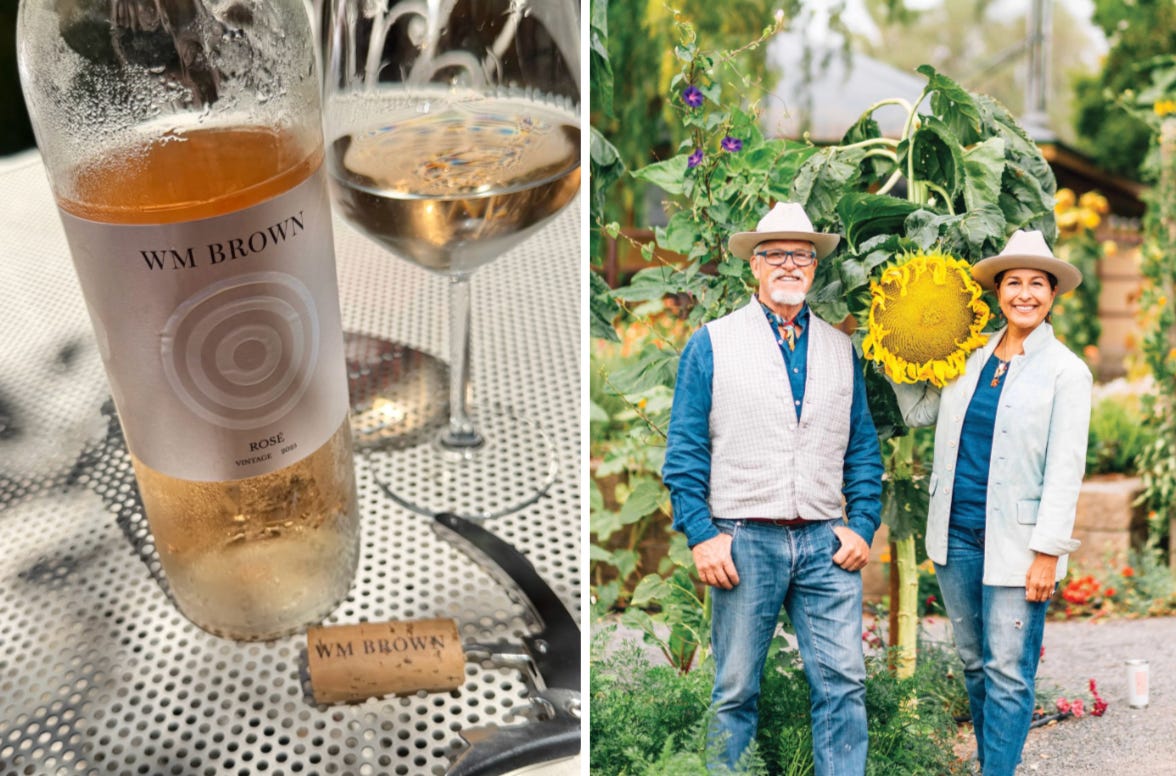
Just in time for summer, I partnered with my friends Cristina and Lee Hudson of Hudson Napa Valley to produce a 2025 vintage of our Wm Brown rosé. Like patch madras or a a hot dog off the grill, rosé is one of the things I love most about summer— I take a deep dive with my friend’s the Hudson’s to demistify the process of making world-class California rosé. You’ll find our full conversation below.
MH: How did this rosé come about, and how was it made?
CH: The thing that’s important to recognize about rosé is that you can have a saigné, which is a red wine that’s bled off into a rosé, or you can have a rosé whose grapes are dedicated to making this specific wine. And this is a very dedicated rosé style that we make in Hudson. We grow grapes specifically to be made into rosé.
LH: What you need in rosé is great fruit and great acidity. If you make it out of the right varieties, you can get also the toothiness that is really important in rosé.
MH: Explain “toothiness.”
LH: There’s something that can be watery and insipid about certain white wines and rosés. And what gives great white wine or rosé a depth of flavor is a phenolic component. In other words, a tannic component that’s very much in the background, but actually makes for the difference between something insipid and something that’s exciting and textural in your mouth.
MH: And how do you get there?
LH: Variety is fairly important. So, our collaboration with William Brown is made from two varieties: Cabernet Franc, the variety from the right bank of Bordeaux, and Grenache. Both those varieties are grown with a relatively high degree of shade, have high yields and are picked at low potential alcohol with high natural acidity.
MH: How do you time that correctly?
LH: So, while we mature grapes towards harvest, we’re going in and pulling samples every five days. And doing analysis of the pH and the sugar content of those grapes. What we’re trying to do is produce a balanced product that’s bright, fresh and not too high in alcohol, so that it’s something we can really enjoy as a beverage.
MH: How do you keep the alcohol low?
LH: We’re picking at very low pHs and the maturity of the grape is on the lower side. That means less sugar. Sugar and alcohol are in a proportional relationship.
MH: What is the percentage of Grenache versus the Cabernet Franc in this combination?
LH: So, it’s about 40% Grenache, which is a low color variety that has great perfume, and 60% Cabernet Franc, which is a more flavorful variety, has a little bit denser texture and the two combined create this beautiful color.
MH: Do you have control over the color?
LH: The color in rosé is determined by how long you allow the juice of the grapes to be in contact with their skins. Because the only color in black grapes is in the skin. And so the skin contact during the pressing process, and immediately afterwards, determines the amount of color.
MH. Essentially, these are both black grapes. On the vine you see them as black grape.
LH: Yes, they’re not at all white. You’re trying to get just this touch of color. For me, as the color gets denser, it makes me start thinking that the wine is sweet. I don’t know why I have that perception, but what we want is just a slight salmon color. To me it’s a very appealing color.
MH: And why would you invest in a California rosé when the overwhelming amount of rosé you see in your wine shop is from the South of France, or Italy or Spain?
LH: There’s great rosé made all over the world. We’re very proud of ours. We feel as if we’re paying much more attention to the quality of the grapes, really focusing on the maturity and blending of the two different varieties.
CH: I think that the important thing to remember about our rosé and many of these small batch rosés is that they’re really being made by hand. It’s not a formula where you’re making huge amounts of wine. We’re really tasting each vintage, the harvest of that year, how things are tasting, and it’s just fine-tuning little tiny changes in the winery that really make a big difference in the bottle.
MH: And how many different combinations of tasting do you think it takes to get to what we’ve produced here?
LH: We make a 100% Grenache rosé that is a little less complex than this wine. For the combination with Cabernet Franc that we made with you, we blend the wines together in February and then it’s bottled in March.
Before that, the wine is pressed and then transferred to a concrete egg, which is an egg-shaped vessel, and fermented in that. It allows for a lot of lees contact—that’s the sediment in the wine, and it gives you that great aroma and texture. Because it’s egg-shaped, it has much more volume, and much more of the fermented product is in contact with the lees.
MH: How do you think this wine is best enjoyed?
LH: The nice thing about rosé is it can completely span the food world. It can be had with chicken, lamb, fish or just a vegetable dish. Or, most importantly, by the pool, in a bathing suit. To me, it’s really about friendship and bringing people together.
CH: I love rosé as an aperitivo, but I really love finishing a meal with rosé, because it’s just, it’s very uplifting, especially if you have red wine, it just really leaves your palate very light and uplifted and kind of joyous.
MH: I also think it’s a nice wine in the heat. Is that why people define it so well with summer?
LH: Yes, it’s just so refreshing. It’s thirst quenching. What I’ve always thought about rosé, is that you make it for two principal reasons: to get a bikini on, then to get the bikini off. It’s a relaxing beverage and it brings people together.
MH: Is rosé summertime only? What are your thoughts on that?
LH: I’m year-round on rosé. Rosé, for me, a go-to beverage when I come home, any time of year. It’s just so refreshing and pleasant. It’s often looked down on because it’s so bastardized, but when you make rosé like this, it’s really dedicated and hand-done, it is as important as any class in the wine world.
CH: It’s actually harder to make good rosé.
LH: It’s so easy to get off flavors in it. And you can’t afford to make a mistake. You can’t fix mistakes in rosé. We’re in a position where we don’t have a way of blending ourselves out of a problem.
MH: What does that mean?
CH It’s like adding too much salt, you can’t go in reverse.
LH: Right, if you’re doing big volumes, and you have wine that’s a little off character, you can blend it out. But this has got to be 100%. And that’s the challenge of making great rosé. You cannot afford to have an off fermentation or too much tannin or too much sweetness. The acid and the texture have to be just right.
CH: What is maturity in the field, and what happens when you pick grapes that aren’t mature?
CH: We have a different sunshine regimen in California than they do in Europe, and so our maturity is just something quite different than the rest of the world, because we have a lot of sunshine.
LH: Yeah, maturity and grapes are somewhat subjective, but under-maturity and over-maturity are really defined. By under-maturity, we mean grapes that haven’t created the flavor profile that’s essential to a fine wine, and over-maturity is this cloying kind of density that throws it out of balance.
MH: And you have been growing grapes up in Hudson for how long now?
LH: Well, we started in 1984, and today we grow about 200 acres of grapes, and we have an active farm where we raise livestock. We’re 40 minutes from downtown San Francisco without traffic. We see San Francisco Bay from our property, which is essential to the slow maturing that we have at Hudson, and it allows us to pick grapes at the peak of maturity and not have our hands forced by nature. It’s good to have nature on our side.
RAG TRADE
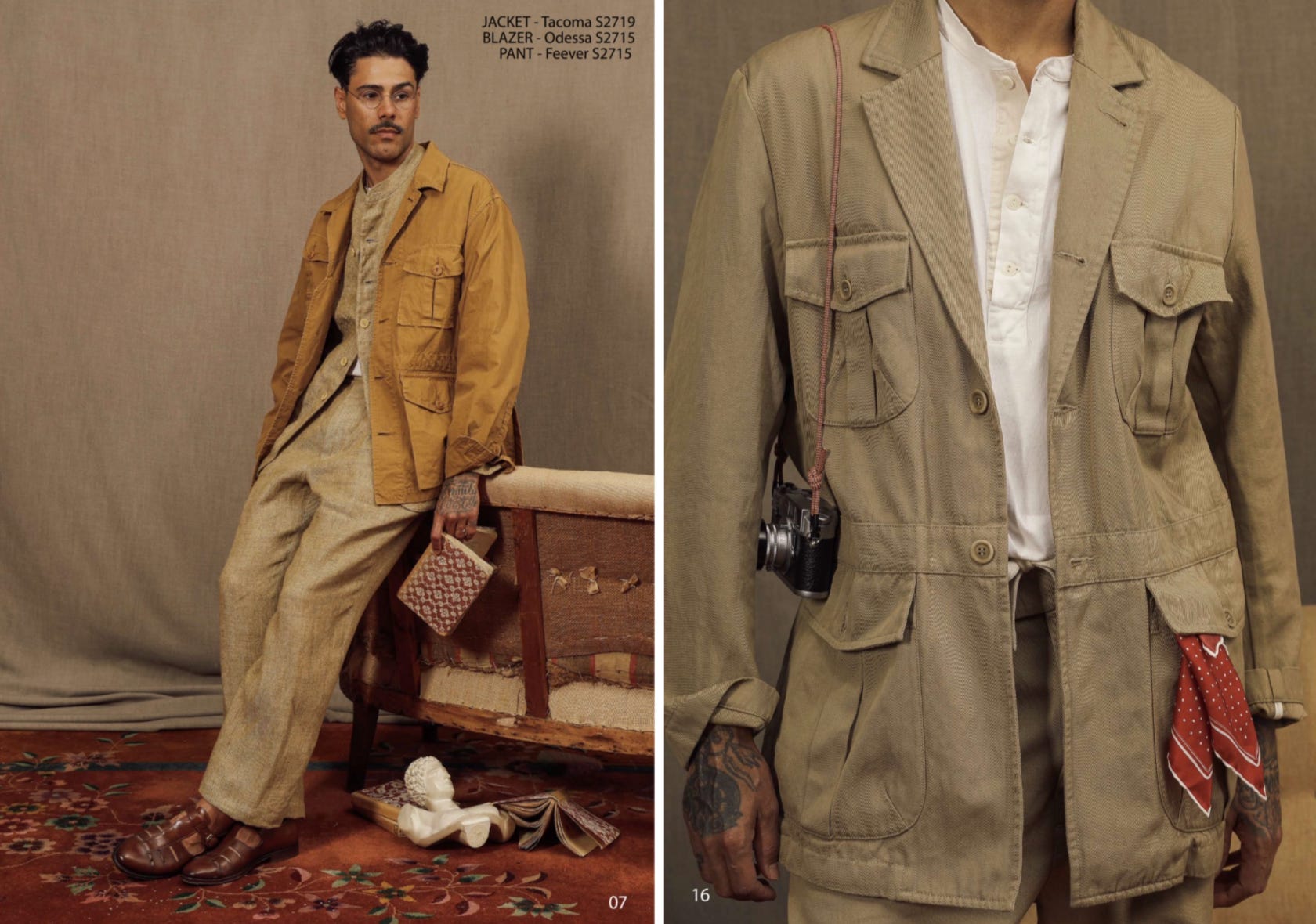
I’d been interested in East Harbour Surplus since the summer of 2023, when I walked into Portland Trading Co. in Portland, Maine, and found a safari shirt made from the coolest, perfectly faded linen fabric. It became an instant favorite, and part of the charm was that it felt like such a discovery. I’d never heard of this little Italian menswear brand with a curiously Anglophone name, and neither had any of the people who complimented the shirt and asked where they could buy the same.
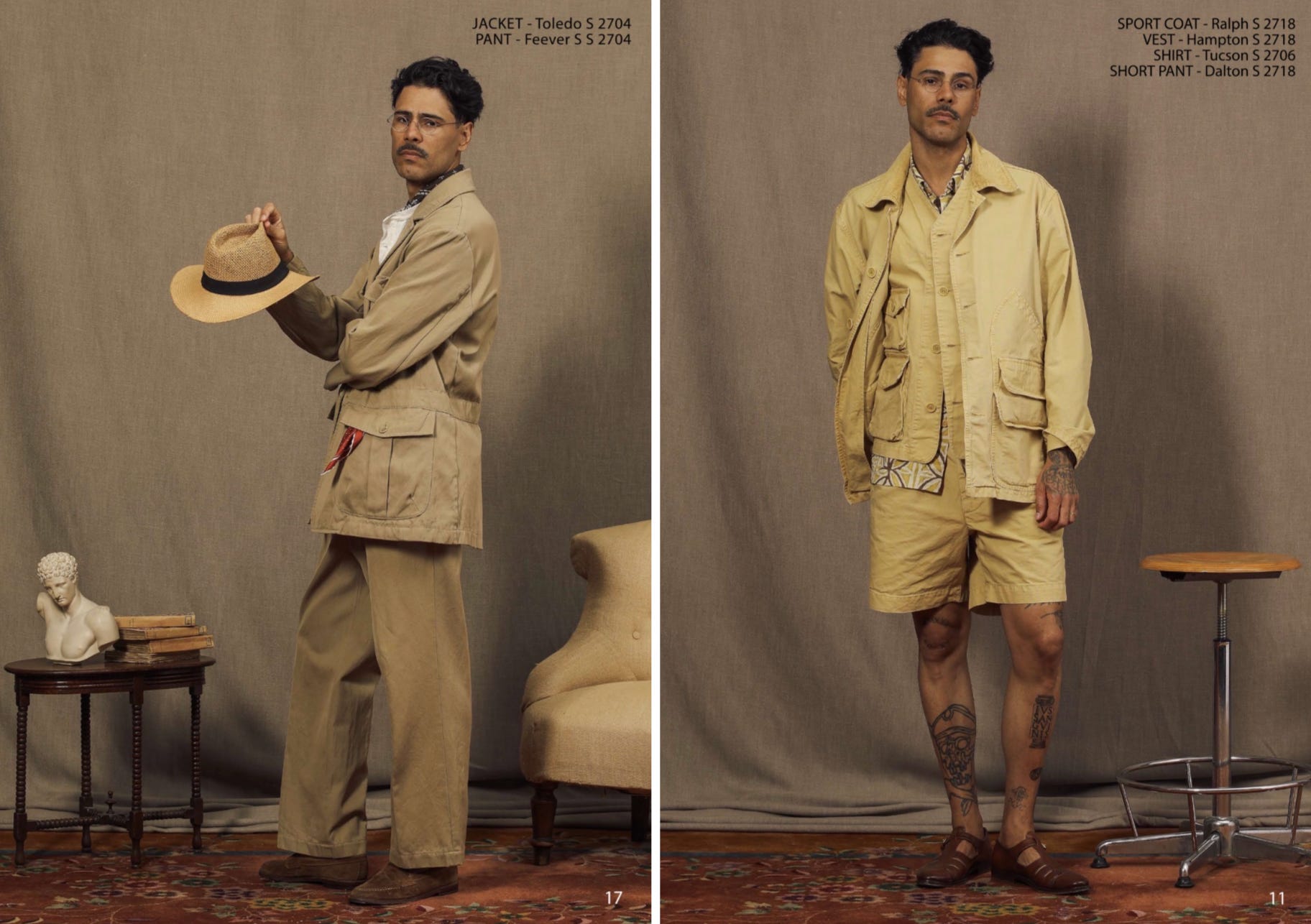
So I was delighted to have the chance to chat with its founder, Fabrizio Vanni, with frequent Wm Brown collaborator Lorenzo Sodi—who also happened to shoot the brand’s latest lookbook —acting as our translator. I learned that its curious-seeming name is an homage to the army/navy surplus stores of old, a fitting moniker as the label was initially made to recreate vintage military jackets. In the years since it’s branched out to have a broader focus, with pieces like pinstriped cotton-linen jackets and drawstring canvas pants.
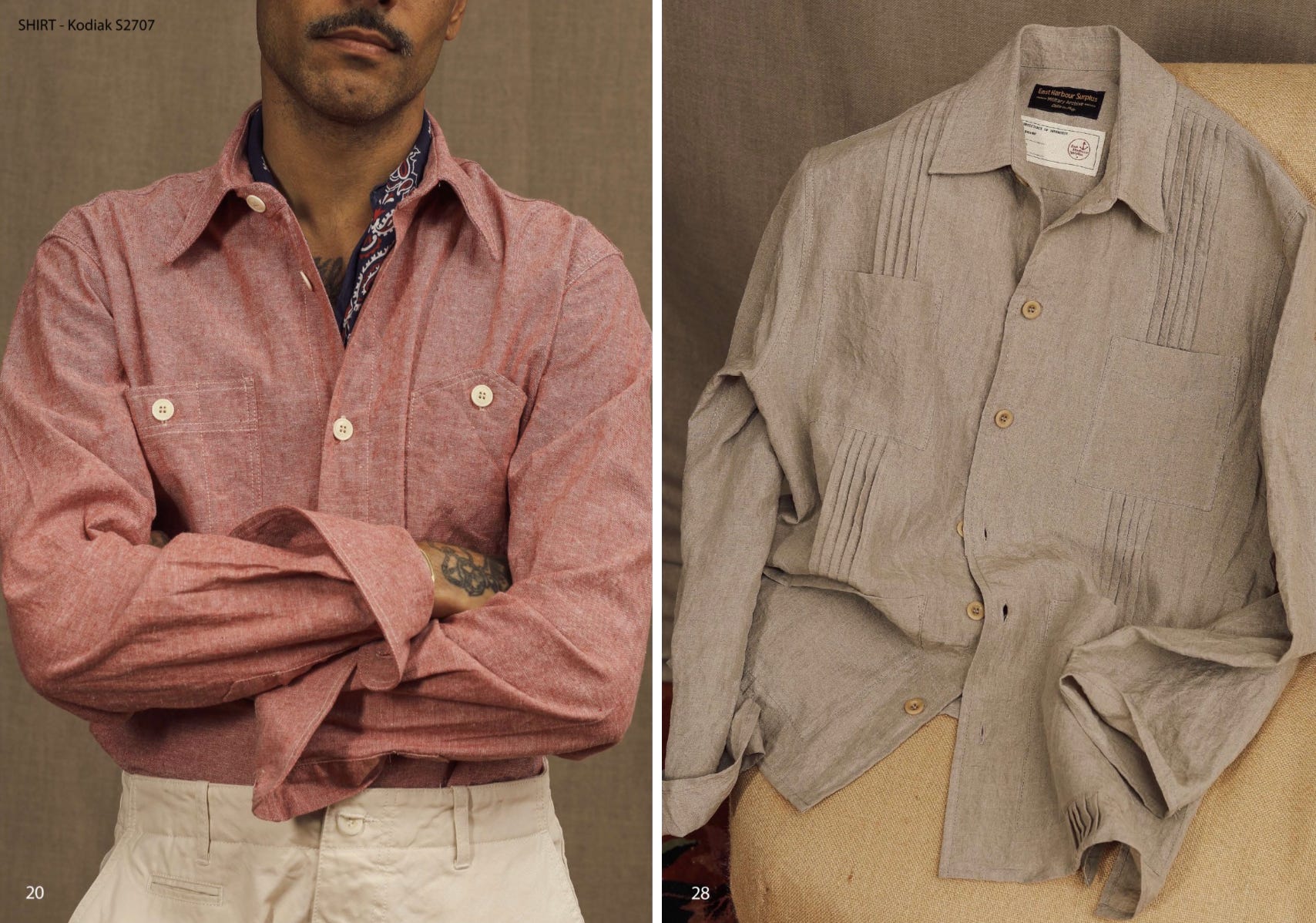
What hasn’t changed is its commitment to quality fabrics. Vanni, who began working in the fabric trade in 1984, is committed to natural materials like cotton, linen and wool, which he gives a time-worn patina through special washings and treatments. All of the garments are made at a single factory just 30 minutes from the brand’s Florence headquarters , which allows Vanni to closely oversee his experiments in-process and fine-tune them to the smallest detail like button choice . He also notes that all of the fabrics are sourced from Italy as well, making East Harbour Surplus a true “made in Italy” clothing brand at a time when other businesses have been caught cutting corners or making exaggerated claims.
While it remains (charmingly, in my opinion) under the radar, East Harbour Surplus is now sold at over 20 stores in North America. We’ve listed them below, should you want to see Vanni’s vision firsthand. —Eric Twardzik
CALIFORNIA
COLORADO
ILLINOIS
MAINE
MICHIGAN
Missouri
NEW JERSEY
NEW YORK
NORTH CAROLINA
OREGON
PENNSYLVANIA
TEXAS
TORONTO
VIRGINIA
WISCONSIN