
Bulletin Board 69
The right drink in the right place, G&Ts on planes and trains and pre-owned watch heaven.
I’m writing to you from the Amalfi Coast, where Yolanda and I have been marking the 75th anniversary of Positano’s legendary Le Sirenuse hotel. Between hotel and island-hopping—and wrapping up our summer issue—time has been tight. So I’m turning this Bulletin Board over to a few friends and contributors; our roving correspondent Jonathan Petrino on when—and where—a given cocktail order feels just right; our deputy editor Eric Twardzik on his favorite place to enjoy a G&T (it’s not a bar), and our frequent photographer Stephen Lewis on a pre-owned watch mecca in Atlanta.
WRIST CHECK

Taking a first step into the world of luxury watches can be daunting. Whether it’s the intimidating aura of a luxury brand boutique, a suspicious website, or even an old school, “Psst! Hey buddy, wanna buy a watch?”on the street corner, figuring out where to turn can be a complicated and risky proposition.
Your answer to this quandary is SwissWatchExpo, a family run and rapidly growing pre-owned watch retailer stationed in the Buckhead section of Atlanta, Georgia, where one family is setting a standard for the preowned watch market with a robust e-commerce site and comprehensive knowledge and service.
Trust is the largest hurdle when considering a preowned watch. Experienced collectors may have learned who to trust, but only with years of trial and error. For the newcomer, it can seem like too big a gamble, sending them running directly to the boutique brands where they pay a very high premium for that security.
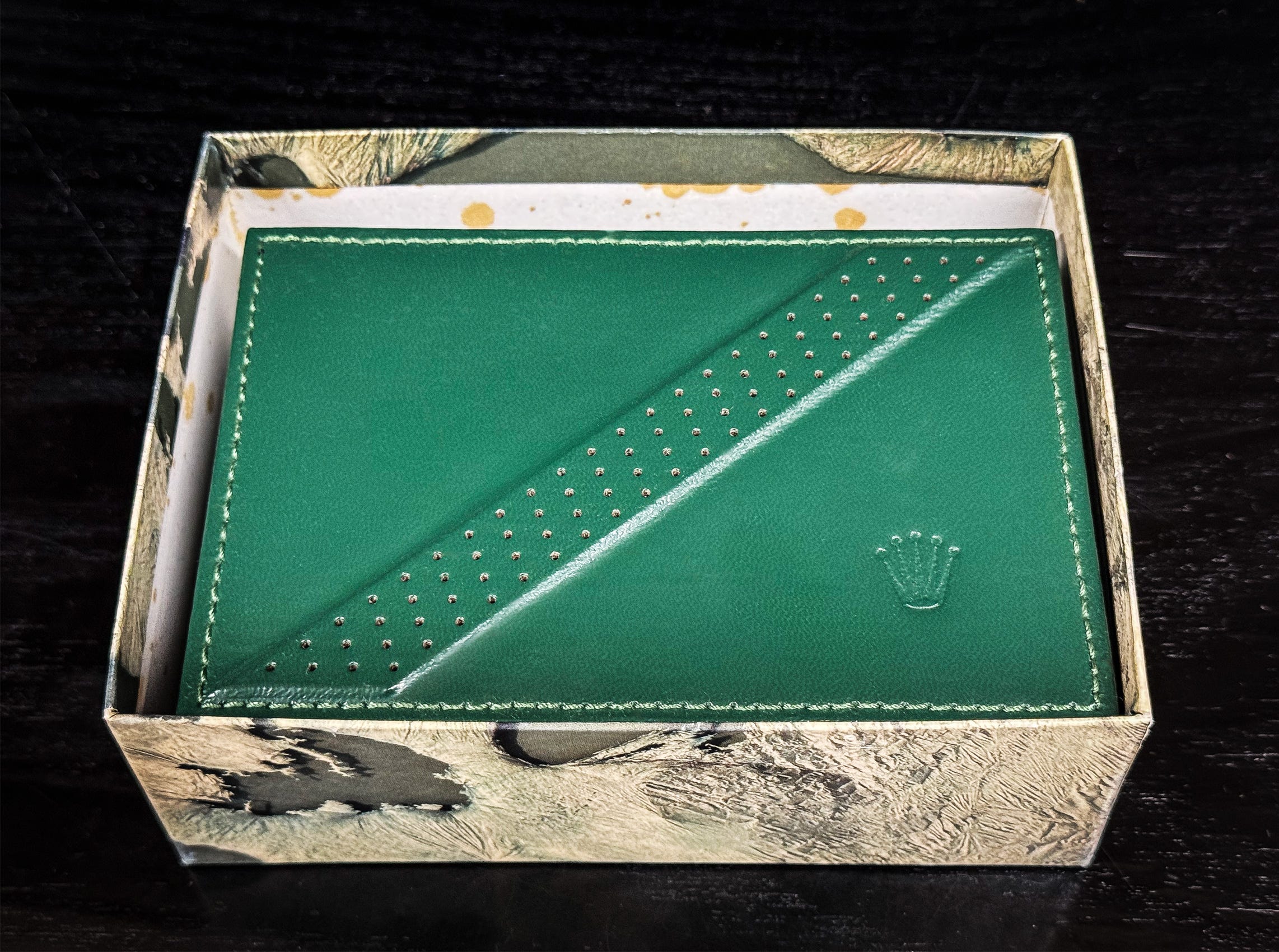
The pre-owned market, however, has two key advantages over the new retail market - lower prices and larger inventory. High end retailers like Rolex carry very limited inventory by design, and this can be frustrating for customers willing to pay. So where do you turn when you want that Daytona?
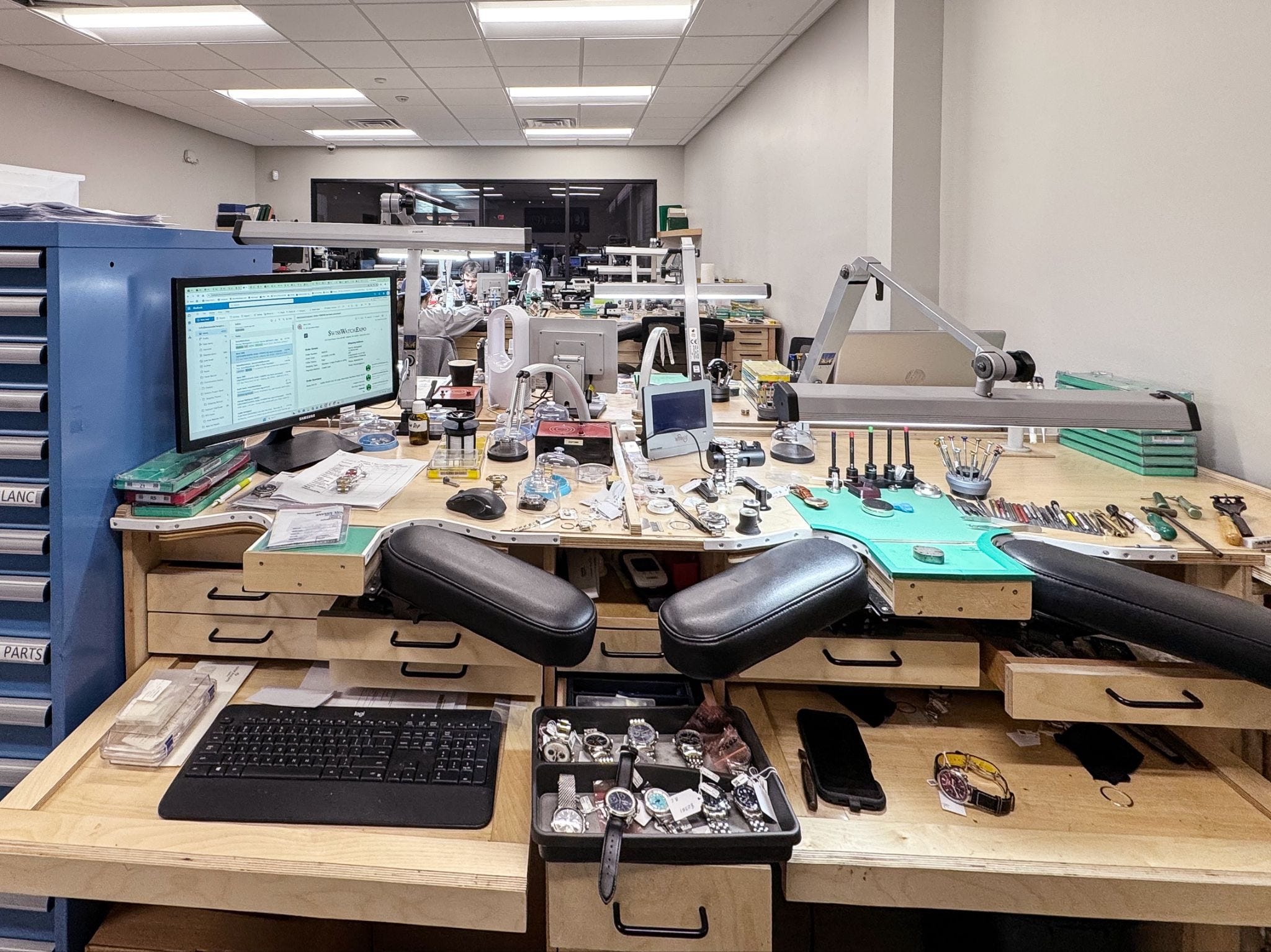
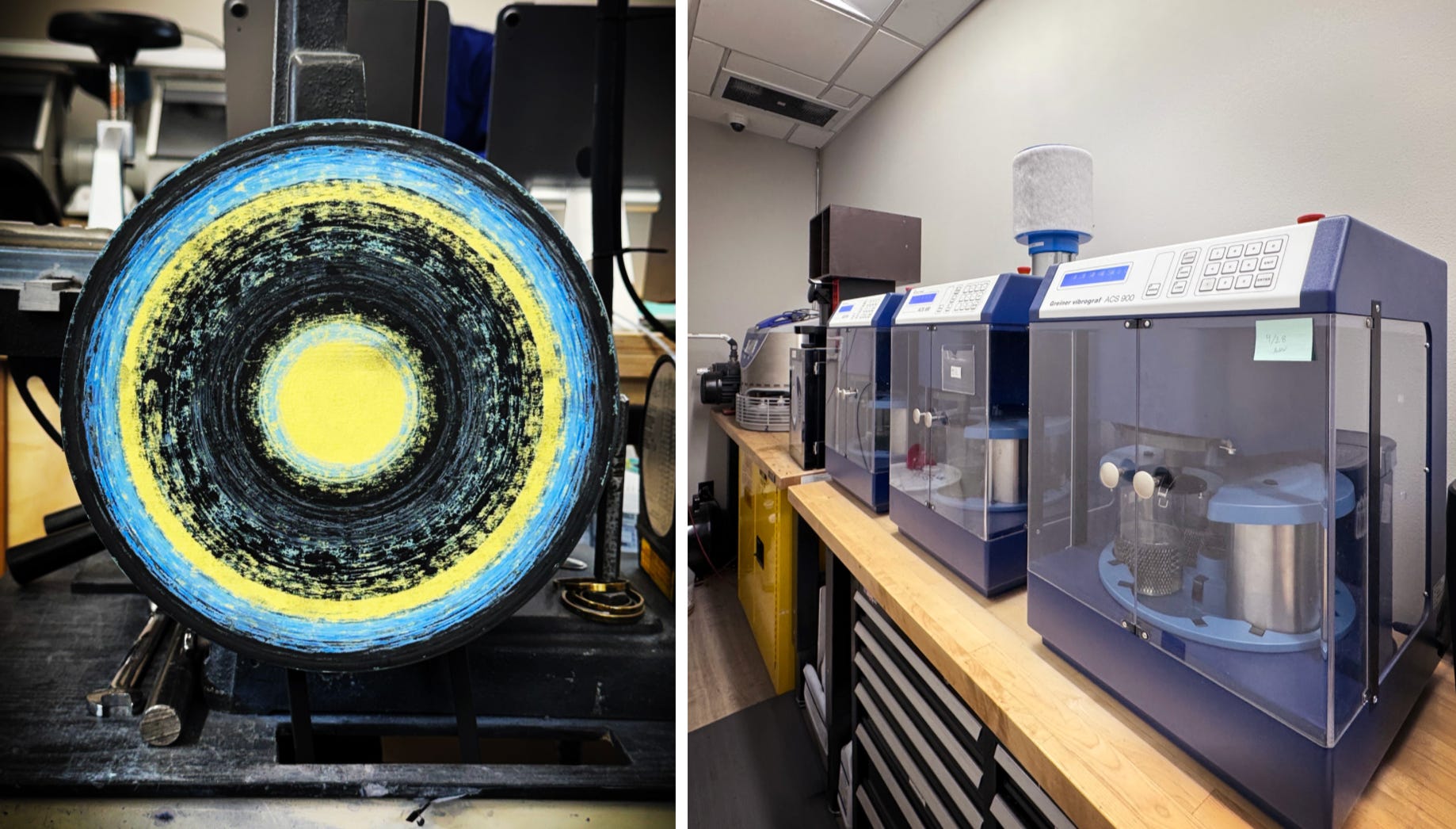
SwissWatchExpo has stepped into the market with an impressive list of attributes. First of all, they have a full service in-house repair shop that vets each watch, twice. Every timepiece that comes in gets inspected, repaired if needed, cleaned, polished, photographed and posted on their comprehensive website. Then, when the watch is sold, it gets a second inspection before being shipped out. I had never seen such a high level of logistics, expertise and enthusiasm as I did on a recent visit to their facility. These guys LOVE watches.
The company is essentially a family run business. Jake Rokhlin, an expert watchmaker, oversees all things mechanical, while his wife Victoria, whose degrees in teaching and mathematics help explain her impressive capacity for organization, runs the in-house photography studio and oversees logistics while her son, Eugene Tutunikov (Rokhlin’s stepson), adds his impressive Wall Street acumen. Together, they have brought SwissWatchExpo to a nine figure operation and it’s still growing. As clichéd as this sounds, their enterprise, with its 37 employees, really does run like a Swiss watch.
Operations on their selling floor are abuzz with salespeople on FaceTime calls, showing details to clients, discussing the inner workings of watches from Cartier, Jaeger LeCoultre, Breitling, Rolex, Patek Philippe, etc. All the big brands are here for both men and women. And this might be the best part of all - with the trust and quality factors sorted out, you now have access to an encyclopedia of Daytonas, Speedmasters, Tanks, Calatravas etc., priced fairly. It’s like a candy store for watch lovers, both new and experienced.
Because they do such a brisk business, inventory is constantly updated and for anyone dreaming of their first luxury watch, SwissWatchExpo is the place to start, and further, your adventure. -Stephen Lewis
For more from Stephen, check out his Substack, Tilt/Shift.
HAPPY HOUR, PART I
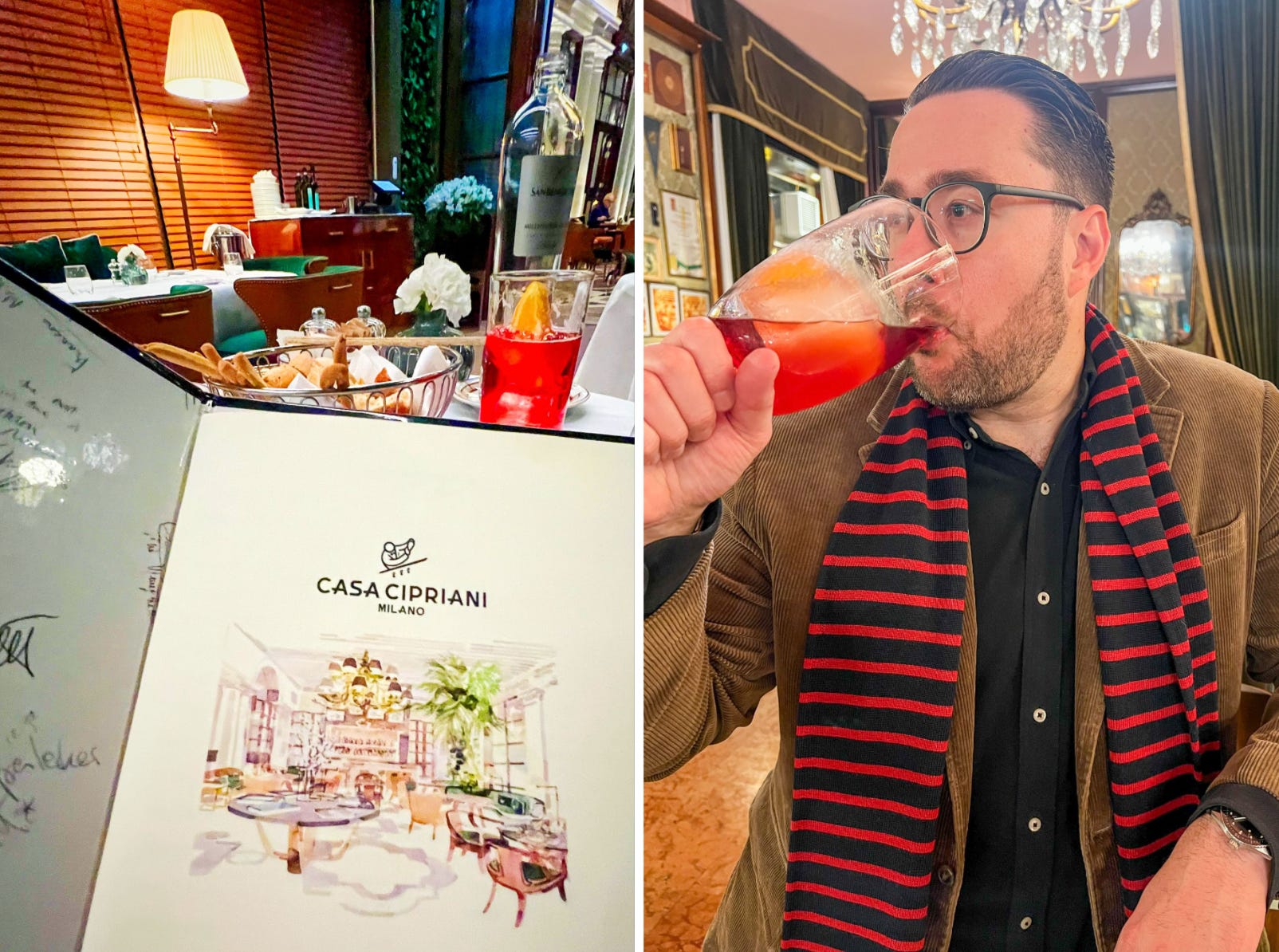
“What can I get you?”
It’s the first question you’re asked when you arrive at any bar, and one that used to send me into a kind of unnecessary analysis.
There was a time when ordering a drink felt like an opportunity to really stretch yourself and try something new (repeatedly). I spent years chasing the World’s 50 Best Bars list and whatever else was fashionable then, happily submitting myself to the age of tinctures, smoke, infusions, reductions, fat-washing, more tinctures, and drinks that were served looking like a chemistry set with some mood lighting. This was more than a dozen years ago, when choosing a destination for a trip could genuinely involve asking, “Yes, but is there a bar there making a clarified milk punch? Maybe also with foraged pine oil?”
And to be fair, some of it was terrific. Some of it was ridiculous. Most of it was part of a broader moment when cocktail culture became more elaborate, certainly more theatrical, and in many cases (as it turned out) more interested in invention than the outcome perhaps.
These days, my drinking life is much simpler. And, much more edited.
I don’t need a menu that reads like a lab report and has to show you with a little sketch what type of glass the drink is served in. I just need the right drink in the right place.
In a dark and cozy hotel bar, I want a gin martini, straight up, with a twist. As cold as possible. That is, for me personally, one of the great civilizing pleasures. London is good for this. New York is good for this. However, my kitchen on a Friday night might just be the best for this. I keep the gin in the freezer, along with the glassware, and the week however long has been adequately left in the rearview mirror. I keep a few small (~2 oz) stemless Cipriani martini glasses and some weightier Ralph Lauren crystal in reserve for exactly this purpose. The best martinis arrive with a high degree of confidence and a very low temperature.
A Negroni belongs almost anywhere, but especially in Italy, where it still feels less like a trend and more like a daily routine. By a fire pit in Umbria, at a bar just off the street in Milan, as the sun starts to set in Rome, somewhere along the coast before dinner. It is one of the few drinks that seems equally at home in grand settings and also completely unremarkable ones, which is part of its genius. I like mine a touch drier than most. Easy on the sweetness, heavier on the gin. I like the bitterness.
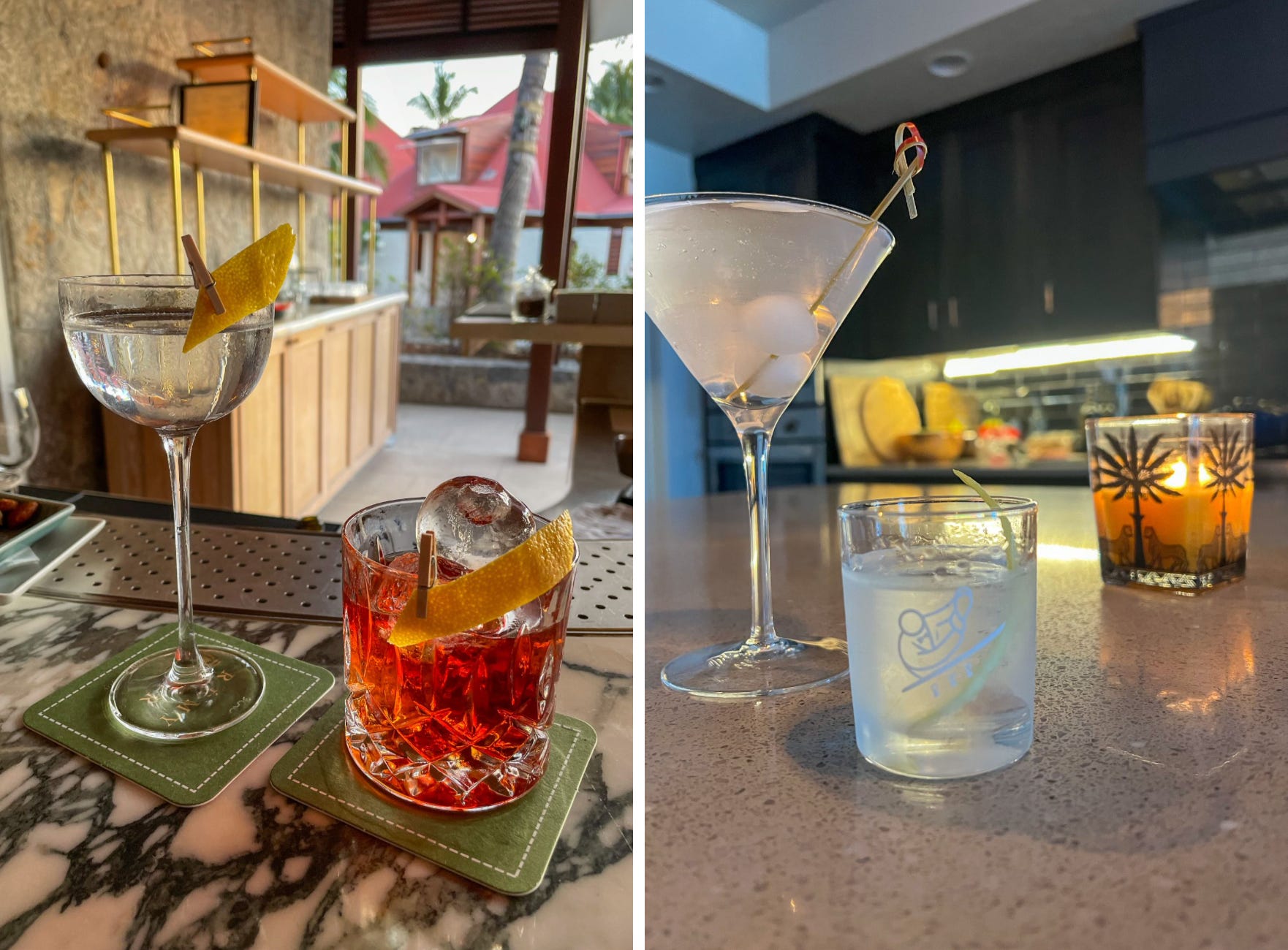
Then there is the Campari soda, which may be one of the most underrated drinks ever devised. When I want to keep things closer to earth, or when the evening does not call for another navy-strength, high-octane, personality-enhancer, that is often my answer. Cold, bright, bitter, restorative. Best with an orange swath. Great on a patio.
And in the right setting, especially when it gets dark early, a Manhattan can be perfect. Execution and judgment are key. Other cocktails might survive mediocrity better than a brown drink can. A bad Manhattan is a very sad thing indeed. Too sweet, poorly stirred, made with indifferent vermouth, or poured by someone who never drinks them themselves. I order one occasionally when the weather is just right and when the bar looks like it knows what it’s doing. Our friends make a fantastic one when hosting.
That is more or less the list now.
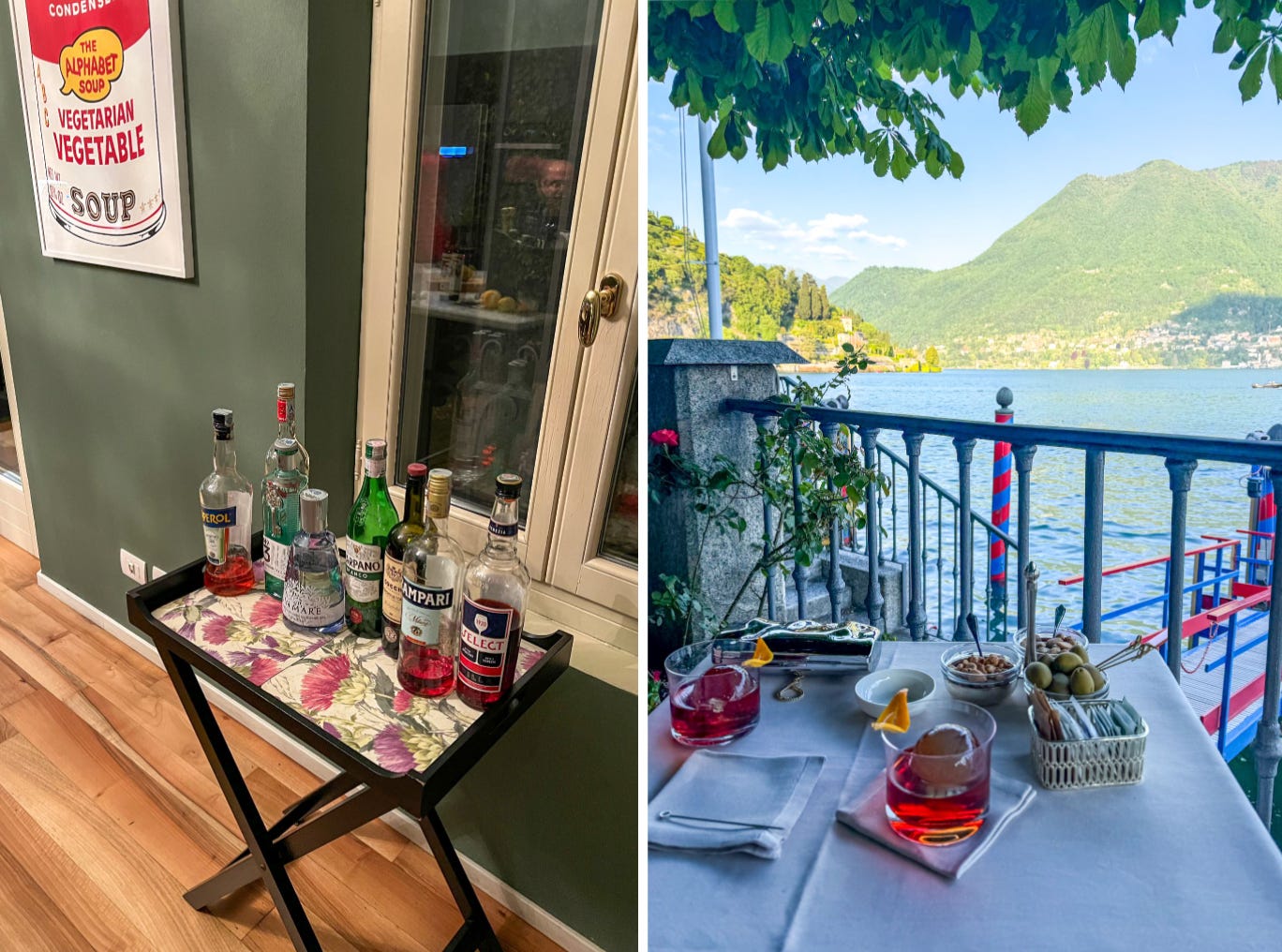
I still allow for minor variations. A gin and tonic always has its place. A good glass of wine often wins outright. But in general I find myself returning, more and more, to the classics. Over the years, I’ve gained a clearer idea of what I actually want.
At some point, if you drink enough drinks in enough places, you stop ordering to be impressed. A martini in the right bar. A Negroni before dinner. A Campari Soda in the sun. A Manhattan when the weather and the company all agree.
These days I’m not at all interested in cocktails that need much/if any explanation. I’ll take the ones that already know who and what they are. What about you? - Jonathan Petrino
For more from Jonathan, check out his Substack, the Studio journal.
HAPPY HOUR, PART 2
I absolutely love a gin and tonic. If 5 o’clock rolls around and I’m at home, it’s what I mix in the kitchen, and I have my own methodology down to a science: Tanqueray on the counter, five-ounce Fever Tree can in the fridge, and a double old-fashioned glass in the freezer. 2:1 ratio in favor of the tonic, and a fresh slice of lime.
As much as I enjoy that level of control—which is why I almost never order it in a restaurant—my favorite place for a G&T is on a plane or a train. As the kids today might say, it just hits different.
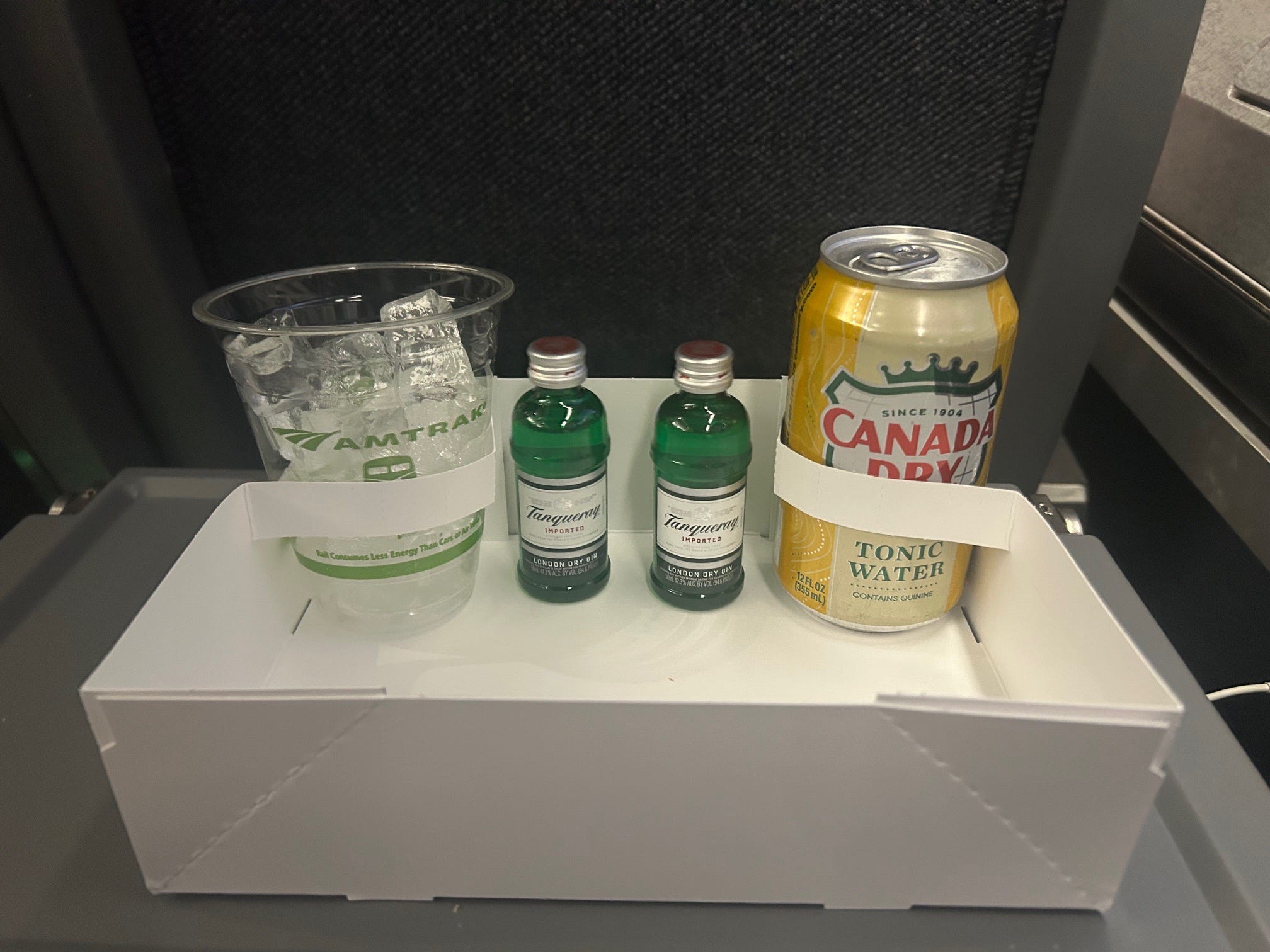
First, there’s the build-your-own aspect to it. I love getting those two little nip bottles. At about 1.5oz, one isn’t enough for a proper drink, and two is too much (in any transit situation, particularly air travel, I choose “too much”). Then there’s the 12oz can of tonic, always Canada Dry, which is overkill considering you get a small plastic up filled to the brim with ice.
So, I always pour both nips into the glass, and then give it what amounts to a floater of tonic. Sometimes I remember to ask for one of those little wooden stirring spoons they serve with coffee to mix it up. If not, I’ll turn one of the empty nips upside-down and use it as a stubby little mixing spoon.
It’s a much different—and stiffer—kind of G&T then what I make at home, but it’s precisely what I want if I’ve spent the whole day in Manhattan and am sitting down for the first time in 10 hours on a train, or if I’ve just made my cross-country flight and am desperate for a nap. As this short, strong drink goes on, I’ll splash in some more tonic on top from time to time, depending on how I feel. It’s not so much to dilute the drink but to extend the experience of it, a sweet respite from the all too-often uncomfortable and uncaring world of modern-day travel. —Eric Twardzik
Totally agreed on the cocktails! Not really looking to drink much of anything these days that isn’t really a standard classic, or something over 3 ingredients. On the Campari soda note too also love a good Americano, that’s a go to.